The One Sentence Every Leader Should Say in the Age of AI
Career


Audio By Carbonatix
By Dr. Michael Steiner, Crosswalk.com

Ask the people who work for you what they’re afraid of this year, and if they trust you enough to answer, most of them will say some version of the same thing: being next. The tech sector cut nearly 80,000 jobs in the first quarter, and companies cited AI in roughly half of them. Gallup finds that 18 percent of American employees now believe automation or AI will eliminate their job within five years. Inside organizations that have already rolled out AI, it’s 23 percent. In tech and finance, it’s roughly one in three.
The same Gallup research says global engagement has fallen to its lowest level since 2020, at a cost of about $10 trillion in lost productivity, and that managers are burning out faster than the people they lead. Put those numbers together, and you get the actual mood inside most companies right now: everyone quietly auditioning to keep a job they already have, for bosses too fried to notice.
Leaders are responding with the tools they know. All-hands decks about the AI transition. Memos about efficiency. Reorgs with new acronyms. I want to suggest something smaller, cheaper, and harder: a sentence.
“We are better because you are here.”
Why These Words Matter in the Age of AI
I teach this as part of a series on things leaders should say every single day, and it draws more skepticism than anything else I teach. Executives hear it and wince. It sounds soft. It sounds like a poster with a sailboat on it. Then they try it on an actual human being and watch what happens to the person’s face.
Here’s why it lands. Every other signal your company sends values people for their output. The performance review measures output. The bonus measures output. And AI is, precisely, an output machine. When a tool can produce the deliverable, a worker who believes she is only her deliverables has every reason to conclude she is replaceable, because in her own accounting, she is. This sentence values something else. It says the company is better because of her presence, her judgment, her effect on the people around her. Not just for her work, for her. A model can write the memo. It cannot be a person your team is better for having in the room.
Appreciation Works Best When It Feels True
Timing matters more than polish. Say it first thing in the morning, when nothing has been produced yet, so it can’t be mistaken for a performance note. Say it at the water cooler. Say it as someone walks into a meeting, in front of peers. Never schedule it. Appreciation that arrives on a calendar cadence reads as HR compliance. Appreciation that arrives while you’re both waiting for coffee reads as the truth.
The cynics have a fair point, and it deserves an answer. Words are cheap, especially in layoff season, and a sentence will not save anyone’s job. Worse, saying it insincerely while treating people as line items is more corrosive than saying nothing at all. Employees have finely tuned detectors for this. So the rule is simple: only say it when it’s true. And if you look at someone on your team and find you can’t say it honestly, that is information. Either you’ve stopped seeing what they contribute, which is your failure to fix, or they’ve stopped contributing, which is a different conversation you owe them. The sentence works as a diagnostic even before it works as encouragement.
Don’t Forget the Leaders Carrying Everyone Else’s Anxiety
One more group needs it, and nobody is saying it to them. Gallup’s sharpest engagement decline is among managers themselves, the layer expected to absorb the AI anxiety from below and the cost pressure from above while performing confidently at both. If you lead leaders, they are the first people who should hear it from you, by name, this week.
None of this replaces the hard parts of leadership in 2026. You will still have to make calls about what AI does in your company and be straight with people about it; false reassurance is its own kind of contempt. But the leaders who come through this era with teams intact will be the ones whose people knew, on the worst day of the news cycle, that their value was never in question at their own desk.
Tomorrow morning, before you open your inbox, say it to the first person you see. Use their name. Then watch what they do the rest of the day.
Photo Credit: ©GettyImages/fizkes
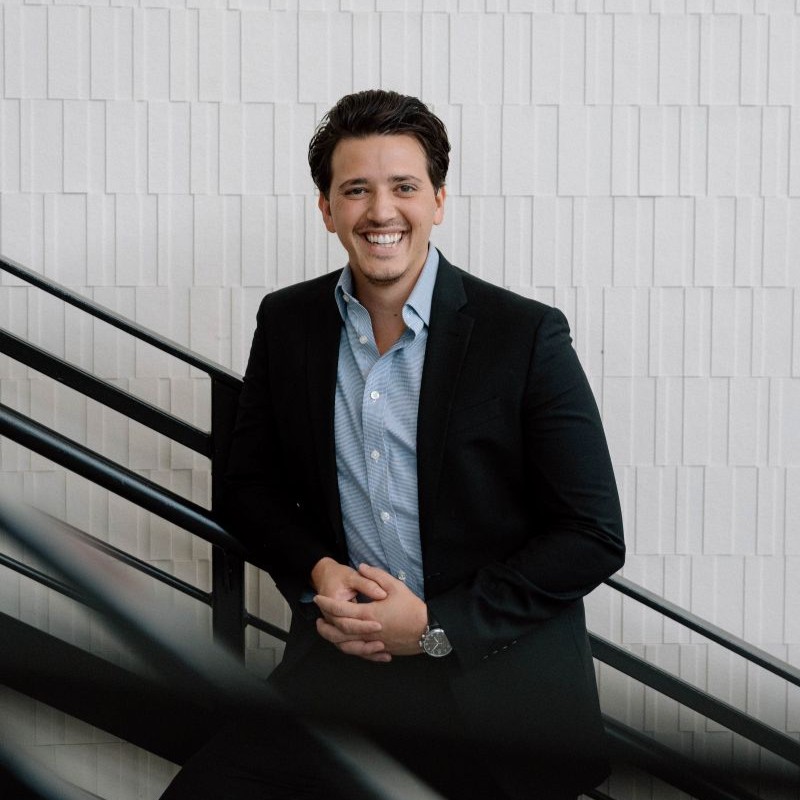 Dr. Michael Steiner is a visionary executive with deep expertise in higher education leadership, strategic planning, and advancement. As Senior Vice President of Advancement & Innovation at Southeastern University (SEU), he leads fundraising efforts, secures transformational gifts, oversees SEU Fire Athletics, and develops innovative funding models to support institutional growth.
Dr. Steiner has raised millions in philanthropic and government funding, including $10 million from the Lilly Foundation, a $4 million appropriation from the State of Florida, and $2.1 million from the Kern Family Foundation. He has led major capital campaigns, most notably SEU’s $80 million “Freedom Campaign” to eliminate debt and enhance financial sustainability.
As founder of Steiner Solutions, LLC, he also provides leadership coaching and strategic planning services to executives and organizations. With a Ph.D. in Business Psychology, an MBA, and a background in practical theology, Dr. Steiner combines mission-driven leadership with data-informed decision-making to advance affordable, accessible Christian higher education.


