Learning Gratitude in the Wilderness | Lessons From the Feast of Tabernacles
Ministries > Discovering The Jewish Jesus with Rabbi K.A. Schneider

https://www.oneplace.com/ministries/discovering-the-jewish-jesus/
Facebook Twitter Instagram YouTubeFeast of Tabernacles (Sukkot) dates 2026:
Begins sunset Friday, September 25
Ends nightfall Friday, October 2
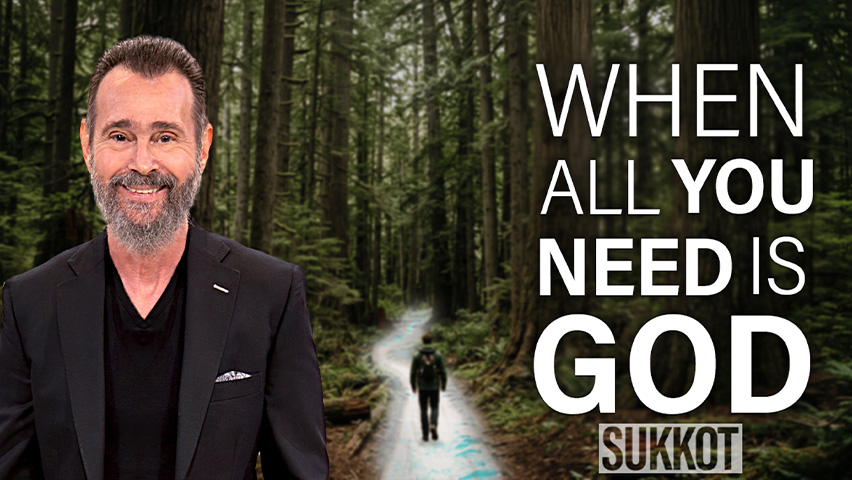
Rabbi Schneider and Dustin Roberts continue to explore how God uses trials to humble us, refine our hearts, teach us gratitude, and prepare us for eternal glory.
**** BECOME A MONTHLY PARTNER - https://djj.show/YTAPartner **** DONATE - https://djj.show/YTADonate **** TEACHING NOTES - https://djj.show/vy4
Visit our website at DiscoveringTheJewishJesus.com
Rabbi K.A. Schneider: Maybe you feel like you're in a wilderness right now. Maybe it's relationally, maybe it's with a husband, wife, child, maybe your health, I don't know what it is. But know this: God will be faithful to you and do good for you in the end.
Dustin Roberts: A difficult season can look completely different when you begin seeing it from God's perspective. Welcome to Discovering the Jewish Jesus. I'm Dustin Roberts, and Rabbi Schneider and I are together today. We're outdoors and we're under the sukkah for the Feast of Tabernacles. It's a beautiful time to meet with the Lord, and we're going to be talking about what God may be doing through our wilderness seasons and also how changing our perspective can turn frustration into gratitude and even reveal purpose in our pain. Now, join Rabbi and I under the sukkah.
Rabbi K.A. Schneider: How many of us are in a situation even now that's hard, and we need to understand that maybe the Lord is doing something in our life in this season that we're in that's difficult? Maybe it's very purposeful on the Lord's part.
Dustin Roberts: This is actually what God's really trying to do is change the way we think about our situation. So when we encounter a situation, we see it differently. Maybe, in fact, we see it as an opportunity versus seeing it as a pain. It's really that half-glass full perspective. So often in life, I think we can count the things in our lives that are going wrong, and we look at things as empty. We don't realize that God woke us up today. We don't realize that we're able to eat and enjoy food. There's a lot of good around us, and we might have the wrong perspective. Sometimes these circumstances, these wilderness experiences, allow us to change the way we're thinking about things so that we can really see things from a heavenly perspective.
Rabbi K.A. Schneider: Absolutely. I'm thinking, Dustin, Cynthia and I took a walk in the park yesterday, and we were smelling some of the beautiful fall leaves and the turning of the season. We could smell it and it smelled so great. I wanted to smell it more, I just wanted to take it in and I wanted to be filled with the fragrance because I was appreciating it. I thought, "You know what? If I just got released from hell, that putrid, sulfur-burning, rotten stench of hell, and I was trapped in there, and then all of a sudden the Lord released me and I was standing in this place in the park right now, I would be smelling these fragrances with such incredible appreciation." But I hope it doesn't take us continually having to go through hard times in order to make us appreciative. I'm praying that I get to a place where I don't need that to be always appreciative because the Lord said in all things give thanks, for this is God's will for you in Christ Jesus. That gets to your point, Dustin, that when we realize that the hard times that the Lord brings us through are sometimes purposeful on His part. Just like the Apostle Paul said. He said because of the abundant revelation that was given to me, God sent a messenger of Satan to torment me in the flesh to keep me from exalting myself. That the trial, the torment, the humbling was purposeful. So when we're going through these hard times, as you were saying, if we realize that there's purpose in them, we can give thanks. It's not about whether we're just enjoying the feeling of it. It's like, "Thank you Father." How do you give thanks in all things? By trusting that in everything that's happening in our life, there's a purpose.
Dustin Roberts: And God's ultimate end for us is not this earth and trials, it's heaven, where He wipes away every tear, removes all the pain. We have a new body that's whole and full, that doesn't get sick. That's ultimately the purpose. There's something about us going through this so that we can really be prepared to value it and receive it and deserve it. I mean, we really don't—there's nothing we can do to deserve it. We know that Israel really never did they deserve the Promised Land; no, God is good, He gives it to us. But you appreciate it and you value it so much more after God has brought you through something.
Rabbi K.A. Schneider: That's a really interesting word that you used there, "deserve it," because it's exactly as you said. It's a bit of a conundrum. It's a bit of an oxymoron, like the two don't make sense together. On the one hand, it's all the blood of Yeshua, 100 million billion percent. What comes to us is a gift; it's a free gift. But on the other hand, there is a participation that takes place. That's why Yeshua said, "He that overcomes," in Revelation chapters two and three. Seven times Yeshua said, "He that overcomes will inherit these things." So there is something. It's kind of like if you put something together, you complete it, maybe it's fixing something in your kitchen or your bathroom or building your basement out, you have much more appreciation for it than if you would have just had a contractor do it. Absolutely, there's something that we gain, and that's a God-given thing. I mean, God has somehow built into us the ability to take pride. I'm not talking about ungodly pride, I'm talking about godly pride. That there is something that God's going to reward us for, and we're going to feel good about the decisions that we made to love Him, about the decisions that we made to love children and love others, about the sacrifices that we made. God's going to reveal that to us one day and we're going to be rewarded for it, and we're going to feel good about it.
Dustin Roberts: Well, there are rewards in heaven. I mean, the Bible says that we will be judged, but there will also be rewards in heaven. I think about that and I wonder, we'll all be content, but will there be different levels of reward in heaven? Will we experience different things based upon what we did on the earth?
Rabbi K.A. Schneider: 100%. I mean, Yeshua said, "Behold, I come quickly and I'm coming to give a reward to each man according to what he's done." Paul talked about the fact that every man's work would be tried and some would be gold, some silver, some brass, and some would be burned up. So I think there's definitely different levels of reward. And again, at the end of the day, it all goes back to Yeshua and His blood. As we're doing this, we're being prepared to receive the reward that God has for us because this is where this is all going. The Lord said, in the wilderness—Moses is speaking—He fed you manna which your fathers did not know, that He might humble you, that He might test you to do good for you in the end. Otherwise, you may say in your heart, "My power and the strength of my hand made me this wealth." But you shall remember the Lord your God, for it is He who is giving you power to make wealth, that He might confirm His covenant which He swore to your fathers, as it is to this day. What I'm getting from all this, Dustin, is just the fact that trials, difficult times, the challenges that we face, this is reality. This is part of living in this world. People that think that they're here to just get as much enjoyment out of everything without a realization and a recognition of the fact that God is going to bring us through testings and trials to get us to become more dependent on Him, to test us in order to bring us to the next level in order that He can bless us. If we don't have a recognition of that, our head's going to just be spinning. We're not going to understand life or what we're going through.
Dustin Roberts: I think about some of the things you and I have talked about in the past. We often start our days thinking, "What's going to make me feel good today?" Okay, well, coffee's going to make me feel good, so I'm going to go have coffee. If something gets in the way of that, though, "Oh, I didn't get my coffee today, the day's ruined." And then, "Oh, and this person called me and, oh man, I didn't want to have to deal with that." And we just complain. We have this attitude that if everything doesn't go exactly the way we thought it was going to go and the way we expect it to go, that we complain. I think about Israel in the wilderness with Moses not having water; they start complaining. God hears their complaints. There's something about these trials, Him trying to bring us to another level to where we are content and our life is not built upon every circumstance being perfect for us to be happy.
Rabbi K.A. Schneider: I love that. I think also this is such a challenge for us. When we're going through hard times, when we feel like complaining, that emotion, that impulse rises up to complain, to be bitter, to be angry, we need to remember these words: that these are opportunities to overcome those impulses and to thank God. It's a simple thing we hear it all the time. You're in traffic, someone cuts in front of you, someone's in front of you that slows you down, and you're in a hurry to get somewhere. That anger rises up, that irritation. But to stop and recognize, this might be an opportunity for me to pull back that negative energy, that impulse of frustration that I'm having. This is an opportunity for me to pull back and look at the situation and first of all ask myself, "Why am I feeling this way? Why am I in such a rush to get to this place? Is it the end of the world if I'm going to be five minutes late because of this? What makes me like this?" We just begin to wrestle with why we are the way we are. We sense that we have this spirit of entitlement, this sense of just being so wrapped up in the now and not putting God first. Like you're saying, it really is a time for an attitude adjustment, to walk through life and practice being thankful and being happy. I'm not telling you that I'm always thankful and I'm not telling you that I'm always happy. But I will say this: I'm working on it. I'm working on looking at the things I go through and getting a godly perspective on them. It's hard, but I keep going up to the next level.
Dustin Roberts: And it's not like these needs that He's talking about here, "I fed you in the wilderness." Being hungry is a genuine need. That's a genuine need. If you're feeling a genuine need, something's wrong in life, you don't have food. Israel wasn't wrong for feeling hungry; they were wrong for complaining and not trusting God in it. I think that's where sometimes we go so wrong, and this is what God's trying to teach us: it's okay for things to go wrong in our life, but it's our attitude when it goes wrong and who we turn to and how we respond that matters.
Rabbi K.A. Schneider: That's perfect. It's so easy to look at Israel and say they didn't do it, but I'm looking at Israel like I understand why they complained. I understand why they were mumbling. I understand why they said, "Are we going to have that rotten manna again today? Breakfast, lunch, dinner, 40 years every single day, are we going to have that same food every single day?" You could understand. But it's a lesson for us, what God wants from our heart, how to walk through life because the truth is, we all want to be happy. But we can't be happy unless we're grateful, unless we're thankful, and unless we have purpose. So what I'm getting from this is that we learn that the Lord brought Israel through this 40-year test for a purpose. The scripture says, "Give thanks to God in all things, for this is His will concerning you in Christ Jesus." As you quoted from the book of James, "Don't be surprised by these trials. God's doing this to test your faith." And it's not testing you to see if you'll pass or fail, it's to bring you up to the next level. It's to refine you. James says that after going through, your faith will have been refined. So purpose we find in challenges like I'm getting ready now to go someplace, I know that I'm going to be walking into a difficult time. But it's like even though I'm challenged by it, I'm like, "Thank you Lord that there's purpose in it, that you're going to do something, you're going to bring me up to the next level." And you know what the good thing is? We're going to come through every difficult thing in life, every wilderness. Maybe you feel like you're in a wilderness right now. Maybe it's relationally, maybe it's with a husband, wife, child, maybe your job, maybe your health, I don't know what it is. Maybe you're going through a wilderness right now, but know this: as Dustin was sharing, God will be faithful to you and do good for you in the end. So we want to choose right now, will we believe? Will we believe in God number one that He's good and that He's going to do something good in the end for us as a result of going through this trial? What do you think about that, Dustin?
Dustin Roberts: Well, I think that you said it well. It's really when you're in a hard time, it's hard to see the good. Jesus, He endured the cross because of the glory that was set before Him. When I think about that, He set an example for us that basically said going through the trial, going through the test, there is a glory on the other side. The more we can remind ourselves of that, I think the easier it is for us to make it through a hard time to know that it is good for me in the end.
Rabbi K.A. Schneider: Amen. And God's going to bring you closer to Him as you cling to Him in the hard time that you're going through right now. I'm thinking, Dustin, it says God did this in Deuteronomy 8:3 that you might understand that man does not live by bread alone, but by every word that proceeds out of the mouth of the Lord. So if we'll respond by the grace of God to become dependent on Him through the trial, it's going to bring us closer to Him. At the end of the day, that's where the only peace we're going to ever truly find is. It's not going to be in the world. The world's peace is temporary. People that have peace right now that are not really living closely with God, the peace that they have is going to shatter at any second because it's based on circumstance.
Dustin Roberts: Right. And I think about it when we're in a hard situation, I think about this verse you just read: "Man does not live by bread alone but by every word that proceeds out of the mouth of God." We keep mentioning James, and I think about James and he said when you're in a hard time, essentially because he's talking about trials, he says, "If a man lacks wisdom, let him ask of God and let him not doubt, because if you doubt you won't receive anything from the Lord." But believing that God is going to give you a word, God is going to lead you through, that you can actually rely on the Lord. Both Deuteronomy and James are saying the same thing basically: when you're going through something, you need to look to God for the answer for what you're going through.
Rabbi K.A. Schneider: 100%. Now let's take a look here at another interesting verse. The Lord told them how difficult it was and that He was humbling them and testing them and they had to rely on Him alone. And then Moses reminds them in the next verse, "Your clothing did not wear out on you, nor did your foot swell these 40 years." What's interesting about that is that even though it's really hard, God's still going to be faithful to you. It doesn't mean that it's not going to be hard. It's going to be very hard sometimes. I'm not taking that away from anything. We go through some hard, painful, excruciatingly painful times. But going through those times, that's birthing something in us. The scripture tells us that the temporary trials that we go through are not worthy to be compared with the eternal glory that these trials are working in us. In other words, the temporary trial, even though excruciatingly painful at times, it's not worthy to be compared with what going through that trial is working in you in the realm of eternal life.
Dustin Roberts: Rabbi, I wonder if we could really fathom what heaven would actually be like, if we could really fathom the glory. I think it was Paul who said they were caught up into the third heaven. They said they were caught up into the third heaven, and he probably didn't want to come back, but he could fathom it. And that's why he said he was content. He's saying, "I've been to the third heaven, I've seen it," and he's saying, "I'm content in prison." No wonder he's content in prison; he had a glimpse of that glory.
Rabbi K.A. Schneider: Yeah, one of the things that we're relating to heaven in the sukkah here is if you look through the roof here. We can look through the roof of the sukkah and we can see the blue skies. What are we reminded of? We're reminded of God in heaven. So when we have that eternal mindset of heaven, it makes everything else a lot easier to bear because a lot of times we have that tension: "Am I really saved? Am I going to heaven? Have I done enough?" And there's that tension in scripture, like the scripture says, "These things have been written to you that believe in the name of the Son of God, that you may know that you have eternal life." On the other hand, we find these other things in scripture where Paul says, for example, "Do these things and prove your election sure," or Yeshua talking about people that they met Him and they said, "Lord, didn't we do all these things?" and Yeshua said, "I never knew you." So we struggle, "Am I really going to heaven?" Let's pray right now that the Father would kiss us with revelation, those of us that are His true chosen ones, that we would know we're going to heaven because that's going to make life so much easier down here. Dustin, would you lead us in prayer?
Dustin Roberts: Heavenly Father, right now for every person listening, Lord, would you just place an image, a feeling, of what heaven will be like inside of them. I pray, God, that you would connect them to an eternal glory that's not of this world, that's straight from your spirit, God. Would you commune with us right now, Lord, and would you allow us to see that truly, just like Jesus, for the glory He knew that was before Him, would you allow us to know the glory that you've set before us? Would you do something that's not just in our mind, God, but something that's deep down in our spirit, inside of us? Do something supernatural right now, I pray. In Jesus' name, amen.
Rabbi K.A. Schneider: In the book of Galatians chapter 6, verse 9, we read this: "Grow not weary in doing good, for in due time you're going to reap a harvest or reap a reward." Now I want you to think about this: when the Holy Spirit gave us that word, He wants to apply it to every area of our lives. Sometimes we apply that word to some area of our lives, but sometimes we don't apply that word to our finances. I want to speak to you that are listening right now. Let's continue to put God first and honor Him with our finances. Let's continue to sow our financial resources into the Kingdom so that God's word can be spread to the ends of the earth. Beloved, I want to ask you, will you continue to do good with your finances? Would you make a financial contribution to the Lord through Discovering the Jewish Jesus right now?
Dustin Roberts: Amen. And if you'd like to support the work of Discovering the Jewish Jesus, give today at discoveringthejewishjesus.com or call us at 800-777-7835. Your giving helps keep this teaching available to people so that they can hear God's word wherever they could be listening. You can mail your gift in the mail as well. Our address is Discovering the Jewish Jesus, PO Box 777, Blissfield, Michigan 49228. And we would love to hear from you today on how God is using Discovering the Jewish Jesus in your life. Maybe something that Rabbi shared helped you through a difficult season.
Related Episodes
The Danger of Forgetting God | Lessons From the Feast of Tabernacles
Wednesday, September 30
Why God Leads Us Into the Wilderness | Lessons From the Feast of Tabernacles
Monday, September 28
The Manna, the Messiah, and the Promise
Saturday, September 26
Related Videos


About Discovering The Jewish Jesus
Discovering The Jewish Jesus with Rabbi Schneider imparts revelation of Jesus' Jewish heritage and His fulfillment of messianic prophecy. Questions of how the Old and New Testaments tie together, and how Yeshua completes the unfolding plan of God, are answered with exceptional clarity. Through understanding the Old Testament and its prophetic nature (with Yeshua as its fulfillment) your faith is strengthened, increased relationship and intimacy with the LORD is discovered, and an end-times vision of life is crystallized. This is an end-times ministry, strengthening the church and calling her to be a readied bride for the return of the Bridegroom, Yeshua Ha-Mashiach (Jesus The Messiah).
About Rabbi K.A. Schneider
Messianic Rabbi K.A. Schneider, a Jewish believer in Jesus and end-times messenger of the LORD, delivers the Word of the LORD with true passion of the Holy Spirit. At the age of 20 years old, the LORD appeared to him, supernaturally, as Jesus, the Messiah. He has since pastored, traveled as an evangelist, and more recently, served as rabbi of a messianic synagogue.
Rabbi K.A. Schneider imparts revelation of Jesus’ Jewish heritage and His fulfillment of messianic prophecy. Questions of how the Old and New Testaments tie together, and how Yeshua completes the unfolding plan of The Almighty Yahweh, are answered with exceptional clarity.
Central to the LORD’s plan is Israel and the Jewish people. Romans 11:11 explains that the Gentile believer has been chosen by God to bring the witness of the LORD to the Jewish people. As this message of Yeshua is brought back to, and received by, the Jewish people, they will say, “Baruch Haba B’Shem Adonai” – “Blessed is He who comes in the Name of the LORD!” and in so doing, usher in Yeshua’s return (Matthew 23:39).
Through understanding the Old Testament and its prophetic nature, with Yeshua as its fulfillment, the viewer’s faith is strengthened, increased relationship and intimacy with the LORD is discovered, and an end-times vision of life is crystallized. “Discovering The Jewish Jesus” is an end-times ministry, strengthening the church and calling her to be a readied bride for the return of the Bridegroom, Yeshua Ha Mashiach (Jesus The Messiah).
Contact Discovering The Jewish Jesus with Rabbi K.A. Schneider
Mailing Address
Discovering The Jewish Jesus
P.O. Box 777
Blissfield, MI 49228
Telephone
1-800-777-7835


