Spiritual Practices for a Sanctified Life I
Ministries > Focus on the Family with Jim Daly

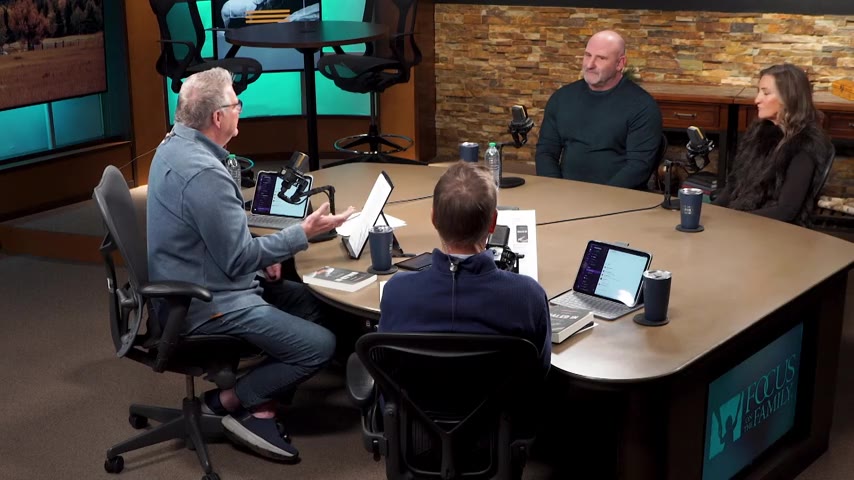
If you’re feeling stuck in your spiritual life, there may be lies keeping you from a close relationship with God. Pastor Gary Thomas identifies common attitudes that sabotage the Christian walk — and how you can rekindle your enthusiasm for God, even when you feel spiritually dry.
Announcer: The following program is sponsored by Focus on the Family and is made possible by the heartfelt support of listeners like you.
John Fuller: This is John Fuller and please remember to let us know how you're listening to these programs on a podcast, app, or website.
Gary Thomas: This self-centered gospel that we preach has huge implications for the way that people live and we miss out on the glory of living a selfless life.
John Fuller: What are some of the lies that rob you from intimacy with God? That's what we're going to explore today on Focus on the Family with Jim Daly. Thanks for joining us and I'm John Fuller.
Jim Daly: John, I think we all glom onto different lies. There's obvious ones. I was looking at old advertisements not long ago. Doctors or actors playing doctors in white medical gear smoking cigarettes from the fifties saying smoking is healthy for you. That was kind of an obvious lie. Maybe they didn't have the data at the time, but the data has certainly caught up to them that it's not healthy. And there's examples like that just in the natural course of life. But then there's spiritual lies that really can catch us. And we have to be in the word, know the word, and be attuned to identifying what those lies are that the culture throws at us, that Christian culture can throw at us, and how to discern those things. I'm so glad to have Gary Thomas back. We covered eight of the 12 things that Gary was elaborating in his book, *The Life You Were Reborn to Live*. For example, pursuit of peace and attempts to control everything. Is anybody leaning into that one? Maybe living a life of adventure as Christians, which is a great goal, see this life as an adventure. And today we're going to cover more from that book and I'm looking forward to it.
John Fuller: The previous conversation with Gary Thomas is on our website. It's available via the app and we'll link to it in the show notes. Gary is such a beloved guest here. Our audience always responds. He's a great friend. He's an excellent writer and speaker. He's written numerous books on topics related to marriage and spiritual growth and he's currently on the pastoral teaching team at Cherry Hills Community Church in Highlands Ranch, Colorado. As you said, Jim, the book, *The Life You Were Reborn to Live: Dismantling 12 Lies That Rob Your Intimacy with God*, is available here at the ministry.
Jim Daly: Gary, welcome back to Focus on the Family. So good to have you here in Colorado.
Gary Thomas: Thank you for having me again. Thrilled to be here.
Jim Daly: It's good. Let's get into this. There's so many good aspects to this book. This is kind of a handbook for how Christians need to be in the word and behave. And that's what I love about this. I'd put this under the category of discipleship. Let's get serious about our faith. Romans 12:2 tells us, "Do not be conformed to this world, but be transformed by the renewal of your mind, that by testing you may discern what is the will of God, what is good and acceptable and perfect." We know that even if we do nothing, we're still conforming to something. This is one of the things that drives me nuts with contemporary Christian culture. It's really dangerous to try to figure out if somebody's truly saved. That's between them and God. You want to nurture someone's relationship with the Lord, but to try to play that broker, I would caution people not to do that. But encouraging people, as I would want to be encouraged if someone comes alongside and says, "Hey, I don't know if you're taking the word seriously." But here's the point. When Christians call themselves Christians and they're conforming to the world, whether there's the sexuality issue, Paul really didn't mean it in Romans that you shouldn't be attracted to the same sex. People get irritated. I'm not the author of the book. I'm just a follower of the book. And I'm not even the editor. But that's the point. Some people want to edit the book and not conform to the book. Speak to that discipline.
Gary Thomas: Well, we don't have permission to edit it. We're to be faithful in passing down the teaching of Jesus and his apostles as it applies to our culture. And the challenge with these lies is that they literally make us spiritually sick. Disobedience comes at a high cost. One of the things I heard growing up was that you don't want to go outside when it's cold because you'll catch a cold. But that's not how you catch a cold. In fact, especially in Colorado when the sun's out, one of the healthiest things you can do is go outside in the sun. But it's that old wives' tale where everybody thought you'll catch a cold, close the door, whatnot. But now medical science tells us it's very healthy to be outside every day and get your vitamin D. So these spiritual lies have the same thing. If we believe them, they make us spiritually sick, even as medical lies make us physically sick.
Jim Daly: I think Lee Strobel would be happy with this. Former atheist journalist and came to Christ after trying to disprove to his wife that Jesus wasn't real. It's an awesome story. Of course, he's written all the "Case For" series, *Case for Christ* and a string of other books. Lee's a good friend, but you were in a journalism class and you talked about in this book writing a good lead. So what does writing a good lead look like, read like, sound like?
Gary Thomas: I was in a number of journalism classes, but I wasn't in the one where this professor gave an assignment to their students. The lead is the opening sentence. And it's so important. The reason that the lead is so important is if somebody is going to read the second sentence. If you don't have a good lead, then they think, "Well, this isn't relevant to me. I don't care about this. This isn't that important." When we're talking about what the gospel is, the message of Jesus Christ, the most important message in eternity, we have to get the lead right. Why does it matter? What is important? What do we need to take away? If we get the lead wrong, people just aren't going to be interested. Why does this even matter? And I think we've done that in some sense with the gospel, sadly.
Jim Daly: And what is that statement? I read it in the book, I know it, it's a bit of a rhetorical question. But what is the lead about Christ, about the gospel, about the good news?
Gary Thomas: Here's what the lead isn't. And this will shock some people. But let me hear this out. What I grew up thinking the lead was this: the full gospel is this. Jesus came in the flesh, died on the cross and rose from the dead so that your sins could be forgiven and you could spend eternity in heaven. And that is a good thing. Every word of that is true. But it's not the full lead. Paul gives us the full lead when he writes to Corinthians, 2 Corinthians 5:15. "And he died for all that"—and that word "that" is so important—"and he died for all that those who live should no longer live for themselves, but for him who died for them and was raised again." We've created a lead that talks about a self-centered salvation. It's all about me and where I spend eternity. Paul taught a lead of the gospel that focused on what is our mission on earth, what do we get done, and how we live selfless lives, giving ourselves away to change this world, to bring God's kingdom to this earth, not to just say, "Okay, I've got my salvation. I can live a selfish life and as long as I know I'm going to go to heaven when I die, all is well."
Jim Daly: Gary, this issue is so critical. I don't want to just blow by it and go to the next one because this is what's crippling the church. I believe right now is that we are self-centered as sinners and recognizing that and then trying to live in that grace spot where you know you are, but it's not good enough to just sit there. You need to become something better in Christ. You don't sit there and go, "I'm a sinner. I might as well lie, cheat, and steal." That's not the gospel.
Gary Thomas: It has such wide implications. Just my wife and I were talking with a wife one time. She told us she was going to divorce her husband. And she admitted, "I don't have biblical reasons. I know God isn't good with it. But I'm still going to go to heaven, right?" And that's the implications of a self-centered salvation. As long as I'm still going to go to heaven. Or a couple, they're living together before they get married. It seems so old-fashioned to suggest that's an issue. Well, look, I know God isn't good with this, but it's not going to send us to hell, right? We're forgiven in Christ. This self-centered gospel that we preach has huge implications for the way that people live and we miss out on the glory of living a selfless life. Every sin has a consequence. It robs us of joy and intimacy, spiritual power, God using us in his kingdom. It's emptying out the church having this thing that salvation is about having our sins forgiven so that we could go to heaven when I say it's really far more about being enlisted. We're not just saved, we're enlisted. We're drafted onto God's team to play a role. What we hear today is people saying, "Come down from that cross." Just like they said to Jesus. "If you're the son of God, come down from that cross." Because they assumed if Jesus could come down from the cross, he would. The fact that he didn't must have been evidence that he wasn't really God. But Jesus proved his deity by staying on the cross. It was because he was the son of God that he stayed on the cross. It wasn't best for him, but it was essential for us. And that's the gospel we need. Not what's best for me, what's best for God's work.
Jim Daly: You've got to start there. Gary, let me press a little bit more before we move to the next item. Is it simply too difficult? Is it too difficult to live the Christian life? It's almost like all the New Year's resolutions. You could say, "I'm going to become a better Christian. I'm going to be better in Christ. I'm going to lose 20 pounds." And then we can't do it. It takes too much discipline to do it. We're talking about eternity and what the Lord requires of us. Yet we have that same attitude like it's like losing weight. "I can't really do it." So is it that it's too difficult? And if we're stuck in this specific area about conforming to Christ, to the word, what do we do to do better?
Gary Thomas: If Christianity was just about a book, it would be too difficult. But it's about a book and the Holy Spirit. When God convicts us, he gives us the power through the Holy Spirit to do it and we just have to call out that word "come down from the cross." I talked to a physician and I think you could apply this if you're a high school teacher or a coach or a parent or just about anything. She was just saying, "I don't know if I can keep doing this" because she was in a situation where the medical establishment she was a part of wanted her to see two or three dozen patients a day, which drove her crazy. She had drug addicts that come in and present symptoms for pain so that she'll give them opioids and they'll scream at her if she doesn't do it. People come in self-diagnosed, they've gone on WebMD, they know what their problem is. Forget her medical education. They'll threaten her with one-star Yelp reviews. She's always just an enterprising lawyer away from a malpractice suit. She just thought, "This is so hard." Now, she fully believes, "This is what God created me to do. This is my ministry. It's my calling. It's my passion." But she said, "Gary, I don't know, it's just so frustrating." And I was able to give her a verse that has changed my life when Paul wrote to Timothy in 2nd Timothy 4:5 when he said, "Endure hardship, discharge all the duties of your ministry." Paul was telling Timothy there will be hardship in your ministry if you're living not a self-centered salvation but a God-honoring surrendered salvation. Sometimes you have to endure it, but you still discharge the duties of your ministry. There's going to be points in marriage where I'm going to say you have to endure this hardship, but discharge the duties. You're a husband, you're a wife, you're a parent, you're a grandparent. It might break your heart, but this self-centered salvation doesn't have room for 2nd Timothy 4:5. At the end of our life, we will look back. Every act of obedience we will be so glad we said yes. Every act of disobedience we'll regret. So it's not easy, but because of the Holy Spirit it's possible.
John Fuller: Gary Thomas is our guest today on Focus on the Family with Jim Daly. He's bringing passion and scripture and truth. So appreciate his heart. Get a copy of his great book, *The Life You Were Reborn to Live*. We have that here. Get it from Focus on the Family and as you can make a donation. Sustain this ministry and keep us going when you're at focusonthefamily.com/broadcast.
Jim Daly: Gary, okay, we've covered one now. We've got to fly through the three others I wanted to cover. But we've got the meaning of the gospel. Now from there you also write as one of those lies dismantling apathy towards the church. What's the heart of that message?
Gary Thomas: We have such a self-centered view of attending church now. "What does church give to me? It's what I can get out of it." When I read the apostle Paul, his passion for the church, what he endured for the church, the sacrifices he made, and then today how we have this consumer view. "Well, do I like the worship? Do I like the preaching?" We have this attitude of what can I get from the church? And Paul had this attitude of, "I will donate my blood, I will donate my marrow for the health of the church." This will help our marriages. When you live for the church, it gives meaning to your marriage. It will help our kids. One of the best ways to keep our kids in the faith, I believe, is to get them used by the Holy Spirit. God has used teenagers throughout history. Mary was a teenager. You've got Francis, you've got Perpetua, an early martyr and whatnot. Where instead of the kids like this, they don't like that, it's what can you give to the church? I'm thinking what would Paul say? Paul had two sentences that described him: "I'm a servant for the church and I work hard for the church." Regardless of what I do for a vocation, if I love Jesus, I have to love his bride. I need to have a passion for the church. We don't experience the fullness of life in Christ if we're not experiencing passion for his bride.
Jim Daly: Are you like my personal counselor here or what? This is just so good. This is so funny because I went to a lunch with a non-believer, a very good friend of mine who's open to the gospel but we've been having lunch together every couple of months for probably 12 years. And he's a real successful businessman. I went and had lunch. And I'm thinking on the drive to the lunch, "Lord, it's going to be nice at some point when you kind of release me to just catch my breath and relax, maybe work on my handicap." I mean, that's literally what I thought. I go into this lunch with this non-believer. He's in his eighties, still working. And he puts his crooked finger on the table at the restaurant and says, "Jim, I hope you're not thinking about improving your handicap and retiring before God wants you to retire." He's the non-believer! And I'm going, "That is classic. God's voice, that is so crazy." I've got to ask you, Gary, when it comes to the shortcomings of us human beings in the church. We're seeing a number of pastors failing somehow, Christian leaders failing somehow. These same friends I'm talking about that are non-believers, they're asking me questions like, "You guys aren't really doing it that well." They'll even say, "It seems like you guys are hypocrites." And I'll say, "Well, to a degree we are. We're not intentionally trying to find that bad place, but it happens. We're not perfect people. We're trying to live it out well. Some people fall and stumble." But more specifically for the body of believers that we're talking to today on Focus on the Family, why is this happening? Why is simply ending well-meaning—don't have an affair, don't steal money, and don't let your pride get in the way. And then they pat you on the back and go, "Well done."
Gary Thomas: I think some of it goes back to self-centered salvation. That we think ministry in some places is seen as an avenue of personal gain, whether it's acclaim, whether it's finances, whether it's a following. But I want to be very clear. I don't love the church because it's perfect. I love the church because Christ is perfect and the church is Christ's bride. There are Christians that will embarrass us. There are Christians that will frustrate us. We're called to reach out to the hurting and hurting people hurt people. And they don't tend to be grateful. Look at how they treated Jesus. Look at how they treated Paul. They said, "Paul, you're not that great of a speaker. You're not that impressive as a person. We're not even sure what you're preaching." He's a babbler. Yet Paul said, "Now I rejoice in what I'm suffering for you. And I fill up in my flesh what is still lacking in regard to Christ's afflictions for the sake of his body, which is the church." Paul is suffering for a church, many of which he'd never met. And he says, "I'm rejoicing because I'm suffering for you, but it's building up Christ's body, the church." I think we've got to have a passion for Jesus. Not just a passion for ministry work because that's not going to fill our souls. It is a passion for Jesus. In some ways, really one of the things that we lack where we fall into sin is an awe of God. We're looking at ministry not as we're just passionate about our love for Jesus wanting to lift up his name.
Jim Daly: Gary, let me ask you this. It's a sensitive question, but it's a good one I think. So often in the church we're trying to put the best foot forward. We feel comfortable that way. "How you doing?" "Oh, I'm doing great." What if we had more authenticity in the church? And I'm thinking of guys particularly. You look at some of the Barna data and other research data on porn addiction. It's in the church, everybody. I've seen data as high as 68 percent of men in the church are looking at porn at least once a month. And 28 percent of women in the church. When we see that kind of honesty in an anonymous research project, wouldn't it be great if we could have that honesty in the church itself when we're going and we're saying, "Man, I'm struggling in this area," and rather than getting condemnation, saying, "Okay, let's get help. What do we need to do? What's your accountability? Put structures in place." Wouldn't that be the healthier way to go? And then why don't we do it that way?
Gary Thomas: I talked to a man who struggled with a sexual addiction. And what he said broke my heart as a pastor. He responded appropriately. He went to 12-step groups. He had four times a year he was involved in a lie detector test with a trained detector. He went through the classes. I mean, it was full-on repentance where everything was checked. But what he said to me that broke my heart is he said, "Gary, when I'm in one of my recovery groups, I know everything about a guy. I know his triggers. I know his character strengths and weaknesses. I kind of know the family situation. I know the last time he sinned and what he's most ashamed of and some of his childhood hurts. I don't know his last name. I don't know what neighborhood he lives in. I don't know his job. I don't know how much money he makes." He goes, "I go to church on Sunday and it's the exact opposite. I know who voted for this person, who roots for this team. I know what neighborhood they live in. I have an idea of how much money they make. I don't know anything that's going on in their soul." And I just thought, "How do we get that community without having to go through addiction to get there?" You're pointing at it. Authenticity. We are all addicts of some kind. I mention in this book my addiction to comfort, my addiction to sugar. I have things that really do drive me. And they might not seem as scandalous as others, but if we're honest about that, then at least we feel compassion for those who have fallen because we see that we're fellow sinners. Jesus is the only hero. And we've got to stick back with that. The church is not perfect, Jesus is perfect. That's why we're committed to the church, because of Jesus.
Jim Daly: I so appreciate your vulnerability. You do write in the book, Gary, about some of those addictions—we say addictions, but those desires for comfort. How does that distract us from God?
Gary Thomas: It really was. I was going on a long flight and I was already irritated because I had middle seat on a cross-country flight. And I have these rituals. I want to have enough water, I want to have my podcasts ready, I want to have my book ready, I want to have my snack ready. And I get very grumpy if people interrupt my rituals to get my flight in. I'm realizing this isn't me following Jesus. This is me protecting my comfort. And I thought, "God, I think a comfort addiction has kept me from talking to neighbors that are difficult. It's kept me from doing tasks that are difficult." And we live in a world that tries to feed our comfort. Everything is set up for our ease and our comfort. When we're surrendered to Jesus, it's usually not a very comfortable life. He's sending us to people that might be difficult. He's asking us to do tasks that are difficult. And we just start to say, "The most important thing for me today is not to be comfortable. The most important thing for me is to be useful to God." And that changes how we see our schedule, how we see our neighbors, how we see our kids. I want to have my identity not that, "Hey, I had a comfortable day today. I got a lot of sleep. I got good food. Everything went well." I want to say, "I think I was used by God today." And usually being used by God is messy and frustrating and anything but comfortable.
Jim Daly: That's a great place to pick up next time. Gary, let's keep going. We've got more of those 12 lies that dismantle our relationship with Christ. Let's do it.
Gary Thomas: I would love to.
John Fuller: We'll hear more of this great conversation next time on Focus on the Family. For now, get your copy of the book, *The Life You Were Reborn to Live*, by Gary Thomas. It's available at focusonthefamily.com/broadcast. On behalf of Jim Daly and the entire team, I'm John Fuller, inviting you back next time as we once again help you and your family thrive in Christ.
Related Episodes
How to Support Your Teen's Mental Health – II
Wednesday, September 30
How to Support Your Teen's Mental Health – I
Tuesday, September 29
Man Enough to Love Well
Monday, September 28
Related Videos


About Focus on the Family
We want to help your family thrive! The Focus on the Family program offers real-life, Bible-based insights for everyday families. Help for marriage and parenting from families who are in the trenches with you. Focus on the Family is hosted by Jim Daly and John Fuller.About Jim Daly
Jim Daly
Jim Daly is President of Focus on the Family. His personal story from orphan to head of an international Christian organization dedicated to helping families thrive demonstrates — as he says — "that no matter how torn up the road has already been, or how pothole-infested it may look ahead, nothing — nothing — is impossible for God."
Daly is author of two books, Finding Home and Stronger. He is also a regular panelist for The Washington Post/Newsweek blog “On Faith.”
Keep up with Daly at www.JimDalyBlog.com.
John Fuller
John Fuller is vice president of Focus on the Family's Audio and New Media division, leading the team that creates and produces more than a dozen different audio programs.
John joined Focus on the Family in 1991 and began co-hosting the daily Focus on the Family radio program in 2001.
John also serves on the board of the National Religious Broadcasters.
Contact Focus on the Family with Jim Daly
Mailing Address
Focus on the Family
8605 Explorer Dr.
Colorado Springs, CO
80920-1051
Toll-free Number
(800) A-FAMILY (232-6459)


