Signs of Joy - Part 1
Ministries > Unlimited Grace with Bryan Chapell
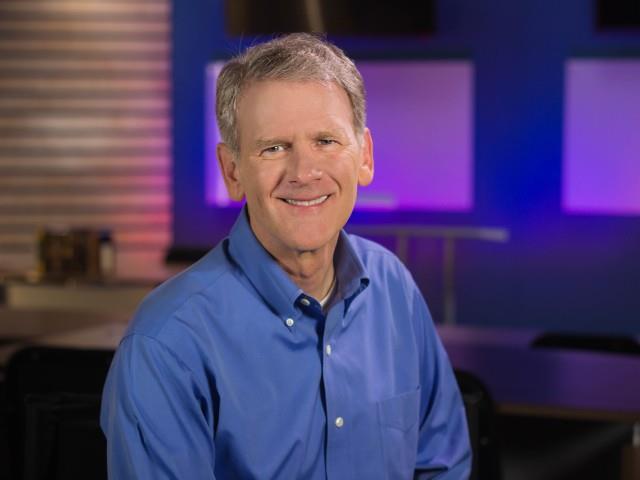
Pastor Bryan shares a lesson from the last few verses of Philippians 1. Dr. Chapell investigates the way we are to live in light of the truth of this passage – we are citizens of Heaven by way of the work of Christ on our behalf.
Bryan Chapell: Paul said it. I resolve to make nothing known among you but Jesus Christ and him crucified. His work in your behalf. And that message is our core. Everything else results from that. But from this message, the church itself is not to move. For when we hold to that, we actually have the ground which gives the church its spiritual power in the world.
Guest (Male): So glad you joined us for today's Unlimited Grace, the audio broadcast ministry of pastor and author Bryan Chapell. In today's episode, Pastor Bryan shares a lesson from the last few verses of Philippians 1. Dr. Chapell investigates the way we are to live in light of the truth of this passage. We are citizens of heaven by way of the work of Christ on our behalf. You can find this lesson and many others when you visit unlimitedgrace.com. And while you're there, look for the children's book "Anyway and Always," written by Pastor Bryan and his wife Cathy. Through this book, the Chapells present the promise of the covenant's fulfillment by Christ in a personal and meaningful way for young children to understand. Let's hear now from Dr. Bryan Chapell as he shares the lesson, "Signs of Joy."
Bryan Chapell: Have I been a good man? Have I lived a good life? The question is asked by an old man through tears of doubt as he kneels beside a cross in the cemetery at Normandy. The cross marks the grave of a man who gave his life almost 60 years earlier for the man who now kneels at his grave site. In that war previous, Private James Ryan was the fourth son of a woman who had already lost three sons in World War II, and military regulations said that she should not have to lose a fourth son. So Captain John Miller, played by Tom Hanks in the movie "Saving Private Ryan," takes a squad of eight men to go save Private Ryan. And in the saving of that private, all eight of the squad members are killed, including Captain Miller, whose dying words to Private Ryan are, "Earn this." So we flash forward 60 years to the 80-year-old in Normandy Cemetery on his knees, still being crushed by the weight of trying to be worthy for the sacrifice that was made in his behalf. What would that sacrifice actually require of his earning? Captain Miller actually expresses it earlier in the film. "He better be worth it. The one we save, he better go home and cure a disease or invent a longer-lasting light bulb or something." But at the end of his life, we see the 80-year-old on his knees, still asking the question, "Am I worthy? Did I earn it?" His children, his grandchildren are around him in a beautiful family, and still he does not know the answer. He's being crushed by the doubt. And maybe it's a doubt that we ourselves feel when we read a passage like this that begins with the words, "Let your manner of life be worthy of the gospel of Jesus Christ." It's almost as though we can hear ourselves at the cross, and Jesus' dying words to us are, "Earn this." And if those are the words that we hear coming from Jesus' mouth, we will always wonder, could we possibly be worthy? But of course, those were not the last words of Jesus. His last words were not, "Earn this." His last words were, "It is finished." The debt is paid. All the penalty is done. You are made worthy, not by your merits, but by the mercy of a God who provided Jesus Christ in your behalf. And when you know that, that you are made worthy by His act, not by yours, your life is not trying to earn Jesus' sacrifice. It is responding in love for the sacrifice that has been given to you. It's actually the wording that's here in this passage if we will read closely and not just hear "worthy" as the crushing weight of guilt upon us. But remember that it was God's will to crush Him to take guilt off of us. The key words are right there at the beginning, verse 27. "Only let your manner of life be worthy of the gospel." That language, a number of your footnotes will actually explain to you, is actually saying behave like a citizen, like a citizen of heaven, which by the way means that you already have the citizenship. That what Paul told us previously was, you are no longer foreigners and aliens, but citizens and members of the household of God, not by your work, but by His. And because you are citizens, reflect that in the way that you live. But you're not earning your citizenship. That is what He has provided by His work upon the cross, Jesus Christ in our behalf. What would it mean for us that we would live like citizens purchased by the work of Christ? If you're a citizen in a country, you have no greater responsibility than when you are called to be willing to give your life for your country. To be a citizen of heaven means to live the responsibility to be willing to live your life as a citizen of heaven. And that means if we are called to conflict, we are willing to go as a citizen of heaven. And it's precisely a conflict to which we are called. Verse 30 is the Apostle Paul saying to those at Philippi, "I urge you to be engaged in the same conflict that you saw I had." This is, in essence, a call to battle. And the Apostle Paul is saying, if you are living as citizens, then I'm going to hear certain things from you from the battlefield. Verse 27 again, "Let your manner of life, citizens, be worthy of the gospel of Christ," so that whether I come and see you or am absent, I may hear of you that you are standing firm in one spirit. The Apostle there is in prison, but he's listening for the sounds of battle. And what he's saying is, I hope that I will hear from you that you are standing firm. Two implications: one is simply that we are not pushed over, forced to retire, forced to retreat by the work of the enemy. That we take the opposition and don't give way. The Apostle Paul well knew what it was to be a Christian in Philippi and knew the opposition that could be there. Remember because he challenged the idolatry that put money in the pockets of certain people. He was beaten by the people of the town, then dragged before the Romans and beaten with rods and then thrown into prison. Paul well knows there can be opposition, the payment of a price. And still he says, "I pray that I hear those of you at Philippi will stand firm for the sake of the gospel." And in doing that, you accept the risk to do so. But it's not just about standing firm against opposition. It's standing firm for the gospel. Whether it's an employer, a professor, a spouse, a friend who is challenging, pushing back, do we stand firm? What would that look like? The Apostle Paul says again, verse 27, that you would let your manner of life be worthy of the gospel of Christ. Every word key: the good news of the anointed one who came to die. This gospel that the Apostle will say later on in verse 29 has been granted to you for the sake of Christ, that you should believe in Him. The Apostle, while he's not putting it all together, is just speaking out of the background of his own understanding of the gospel. It has been granted to you to believe in the gospel, the good news of the one who came to die in your behalf. That your faith is not in what you do. Your faith is not in your performance. What has been granted to you, the very work of God, is that you would believe by faith. God has worked in your behalf through the work of His son as we approach the 500th anniversary of the Reformation at the end of this month. We remember the Reformers stood by those principles: faith alone, in grace alone, provided by Christ alone. And here's the Apostle saying, the faith has been granted to you to believe in Christ who provided for you. And don't give way on that. That's the message not of your performance or anyone else's performance. It's not any other message in the church. I want to hear that you're standing firm, not being pushed away by the opposition, but not moving from the gospel.
Guest (Male): You're listening to Unlimited Grace, the audio broadcast ministry of pastor and author Bryan Chapell. Raising children to love the Lord can sometimes feel like a daunting task. The physical, mental, and emotional energy needed to engage with a child can also lead to feelings of inadequacy and doubt for parents. How then can you effectively talk with children about Jesus or demonstrate to them His love? Written by Pastor Bryan and his wife Cathy, "Anyway and Always" is a heartwarming children's book designed to help explain the love of Christ to a child. The Chapells present the promise of the covenant's fulfillment by Christ in a personal and meaningful way for young children to understand. Page after page of beautiful illustrations complement Bryan and Cathy's captivating storytelling. Whether you read this as a bedtime story or share it around the family dinner table, this book is sure to become a favorite of children and parents alike. You can request your copy of "Anyway and Always" when you go online to unlimitedgrace.com or by calling 844-41-GRACE. That's 844-414-7223. And now, more from Bryan Chapell on today's Unlimited Grace.
Bryan Chapell: And here's the Apostle saying the faith has been granted to you to believe in Christ who provided for you. And don't give way on that. That's the message not of your performance or anyone else's performance. It's not any other message in the church. I want to hear that you're standing firm, not being pushed away by the opposition, but not moving from the gospel. It is possible for the church to move from the gospel. Russell Moore, the head of the Ethics and Religious Liberty Commission of this Southern Baptist Convention's United States, writes this: "In a politicized era, we can morph the church's mission into a message about political influence or family values or upward mobility. But if any of these take over our efforts, the gospel loses ground." "We lend a voice to every just cause. We work against every moral compromise. And we pray for every spiritual blessing. But we stand for Jesus Christ and Him crucified." Paul said it. I resolve to make nothing known among you but Jesus Christ and Him crucified, His work in your behalf. And that message is our core. Everything else results from that. But from this message, the church itself is not to move. For when we hold to that, we actually have the ground which gives the church its spiritual power in the world. And with that spiritual power, the Apostle has expectations. He says what they are, the end of verse 27. "Hear that you are standing firm in one spirit, with one mind, striving side by side for the faith of the gospel." Not just standing firm, but striving together. Two implications: if you are striving, you are moving forward. It's not just standing firm. Not just saying that's our obligation, not to let anybody touch us. But the goal of the gospel, the Apostle will state in the very next chapter, it is ultimately so that every knee will bow and every tongue confess that Jesus Christ is Lord. Our calling is to be salt and light within our society, not just to retreat into a corner culture, not just to take pride in our own church, not just to insulate our own families. But to ultimately say, as we are standing for the gospel, there is another step to take, and that step is to take forward motion into the calling that God gives us. When Robert Morgan was here last week, do you remember he said that when the children of God were there encamped on the Red Sea believing the Egyptians were about to take them, the first command: stand firm. Second command: step forward. There is a job to do, but not alone. Striving side by side, one spirit, one mind, one faith. The message, of course, is that our citizenship is not one of independency. That we are not called by Christ to just be okay with Jesus ourselves. That we are called into a corporate relationship into the citizenship of the kingdom of God. And because we are called into citizenship, we are called together for the sake of others. When the Apostle actually uses the language here of striving side by side, the image that would be called to mind in his time was of the Roman Legion. Shield against shield against shield, marching against any enemy, unstoppable as one body, virtually one man moving against the opposition. But what would it mean for us or even the people at Philippi to be saying we are to strive together, moving forward, shield to shield, going forward into the society in which God calls us? Already we're being taught. The Apostle began this letter saying, "I, Paul, with Timothy." Here I am, a Jew, older man, with a mixed Jew and Gentile, younger man, and we are together in this prison situation now giving an example to you. And who are you that I'm calling side by side? Well, Lydia was there. There's a Greek woman businesswoman. And at the same time, we know in the church is the Roman jailer. Historical enemies, mixed genders, different ethnicities, different languages, different backgrounds, different social status. Side by side for the sake of the gospel. What would it mean for us to say, different generations together, side by side, that we are called together into church citizenship, what we call membership in our day and age, not just to swell our roles, not just to increase our stature? That what we are actually doing is we are believing that we are committing ourselves to one another by saying, I'm not in this alone. I'm for you and you for me, and we are together in the mission of the gospel. There are things that believers do. When we commit ourselves to Jesus Christ, we show our loyalty by baptism. I say to the world and to the church, I am made right with Jesus Christ, not by my works, but by His shed blood. It is His blood that washes my sin away, and in baptism, I show my loyalty to His work. But when I do that, I show my membership in the body of Christ. I commit myself to other people financially, in the vote like the congregational meeting we just had, committing to each other in prayer meetings, in small groups, because we know we have to be shield to shield, side by side. And when we do that across generations and across ethnicities and across demographics, we are actually showing to the world the work of Jesus Christ among us. Do you remember in Ephesians, the Apostle Paul said when he was calling people from different ethnicities to work together in the church for the sake of the gospel, that they were doing it so that the multi-colored wisdom of God would show forth to the authorities in the heavenly places. Have you ever thought about what that actually means? That the manifold wisdom of God, which by the way in the New Testament is the same word that is being used to translate Joseph's multi-colored coat in the Old Testament. That the multi-colored wisdom of God, because of what's happening in the church, would actually be displayed to the heavenly authorities. Now we think of heavenly only being describing where the angels live. But in the book of Ephesians, remember, we wrestle not against flesh and blood, but against powers and authorities and spiritual wickedness in heavenly places. The Apostle is saying that when the church comes together, shield to shield, life to life, supporting one another in small groups, in prayer, across ethnicities, across gender, across age, all of that together, that even the demons take note and say, "My, what kind of God are we dealing with? They can get those people together, working together for the sake of the gospel." Sometimes we think that in the church where we talk about working cross-generationally and cross-ethnicity and cross-regions and cross-nationality, that we're somehow just bowing to the present age's political correctness. No way. There is, as it were, a ladder of tolerance as the Bible is describing it for believers. One ladder of tolerance is I'll not hate you. That's the bottom rung. I'll not hate you. A little higher ladder says, well, I'll accept you. You're different than me, but I'll let you in. But a higher rung says I actually desire the gospel to show by God bringing together in one body people of different backgrounds. But there is a higher rung, and the highest rung of all says I don't only desire different kinds of people here, I need them. For the gospel to be in its place, for the demons to scatter, for the work of the gospel to go forward, we actually need to show that the gospel is not just for a homogenized church, just people like us, just people of my age, just people of my demographic, just people like me. No, when is that the church? I'll form my church and I'll get mine, and you go form your church and you'll get yours. How is that the gospel? The gospel is where people are saying we will put shield to shield, knowing that every generation, every ethnicity has strengths to give. I mean, I think of the beauty of being in a legacy church like this and to recognize what it means for a younger generation at times to look across a congregation and say, "You know what? I'd lost faith in marriage. I'd lost hope that a family could hold together. But in that church, there are people who have been married 30 years or 40 years or 50 years or in this church, 60 years plus." And say, "I take hope again. The gospel really can mean something in families." And there are older people who begin to think at times there is nothing we have done that makes any impact in society. And then you look at a younger generation for whom there is absolutely no currency to live for Christ today, no benefit. And yet they are going against the current of the ideals of our universities, of sometimes their friends' practices and habits, saying, "I'm going to stand for the Lord." "And I'm going to be a part of a body of Christ. And I'm not just going to go over to a twenty-something church and meet with more twenty-somethings. I'm actually going to believe that there is power in the generations coming together, that there is intentionality of God in putting shield to shield, working side by side for the sake of the gospel." And I'm not just going to say you get yours and I get mine. No, it's selflessness, it's living, it is sacrifice for the sake of others. And when we are moving forward in that way against all odds, against all the differences, crossing all the boundaries for the sake of the gospel, what then happens? We become fearless in the cause of God. It's verse 28, as we are striving side by side for the faith of the gospel. Paul says, "I want to hear you are not frightened in anything by your opponents." That by having people around us who are standing firm, by having people around us who are side by side with us, linking shields in prayer, in small groups, in finance, in supporting mission, when we are side by side, when we are that Roman Legion moving forward, fear just doesn't occur to us.
Guest (Male): That's Pastor Bryan Chapell, and you've been listening to Unlimited Grace. If you've missed anything that you'd like to hear once again, just visit unlimitedgrace.com. And when you do so, you can sign up for Pastor Bryan's daily devotional sent right to your inbox. While you're there, also be sure to request a copy of the book from Dr. Bryan Chapell and his wife Cathy called "Anyway and Always." We'll send you a copy right away as our way of saying thank you for your most generous financial support. Once again, go to unlimitedgrace.com or you can give by calling 844-41-GRACE. That's 844-414-7223. Please be sure to join us next time as once again we endeavor to put Christ at the center of our efforts so that lives might be transformed by His unlimited grace. This ministry is brought to you by Unlimited Grace Media and continues to be made possible with your generous financial support.
Related Episodes
Between a Rock and a Hard Joy - Part 2
Wednesday, September 9
Between a Rock and a Hard Joy - Part 1
Tuesday, September 8
Unstoppable Joy - Part 2
Monday, September 7
About Unlimited Grace
Unlimited Grace is dedicated to spreading the gospel of God’s grace to all people. We desire for believers everywhere to serve God through faith in His grace that frees from sin and fuels the joy of transformed lives.About Bryan Chapell
Bryan Chapell, Ph.D. is the Stated Clerk Pro Tempore of the Presbyterian Church in America (PCA), based in Lawrenceville, GA.
Dr. Chapell is an internationally renowned preacher, teacher, and speaker, and the author of many books, including Each for the Other, Holiness by Grace, Praying Backwards, The Gospel According to Daniel, The Hardest Sermons You’ll Ever Have to Preach, and Christ-Centered Preaching, a preaching textbook now in multiple editions and many languages that has established him as one of this generation’s foremost teachers of homiletics.
Dr. Chapell is passionate about sharing the truth of God's grace with others, because it provides the freedom and fuel for transformed lives of joy and peace.
He and his wife, Kathy, have four adult children, a growing number of grandchildren, and lives rich with friends, fishing and faith.
Contact Unlimited Grace with Bryan Chapell


