Jesus claimed to be God in human flesh. The question is, is that true? Whether He was or not is not the issue, but the fact that He did claim to be God.
Critics have said that Moses, who lived in 1400 B.C., could not have written the priestly codes and the moral legislation, because there was not time for it to evolve to that level. How do the finds from Ebla address this critique?
There are many traditions that record the same stories of history. While many people say this is the very reason they don’t believe the Bible, it ironically proves the truth and accuracy of the Bible.
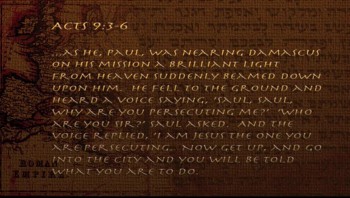
Something dynamic happened in Paul’s life in a short period of time that turned his world upside down. He not only became a Christian, he became a leader of the church in Jerusalem, and he became an evangelist over the known world to share Jesus Christ as the Messiah.
Josh explains why one of the greatest testimonies of the power of Jesus Christ, the validity of the Scriptures, and the resurrection is the Apostle Paul.
Did the kingdom of Ebla exist? The findings led David Noel Freedman to make this claim, “Behind the tradition of the Bible there is now established fact.” There are two or three major criticisms that scholars have made about the Bible over the years, and Ebla has disarmed every one of them.
The civilization of Ebla existed 1,000 years before Moses and existed for 800 years as a great civilization. The finds from this excavation site revealed two distinct languages used during the reign of Ebla.
Josh delves into the details of Moses as author of the Pentateuch. An excavation site brought to light an ancient civilization, the kingdom of Ebla that clarifies the issue of Moses as the Pentateuch’s author.
Josh introduces the debate of scholars towards the authorship of the Pentateuch. Jesus Himself quotes Moses 16 times and attributed to him the Pentateuch, but what about the dates and the development of the writing system?
Robert Dick Wilson said, “If anyone questions the accuracy of the Old Testament, tell them just to check out the spelling of the kings.” There were 40 kings living between 2,000 B.C. and 400 B.C., and each one appears in the Old Testament in exact chronological order with reference to his country, every single one of them spelled correctly.
The Bible shows a dramatic accuracy in comparison to Non-Biblical texts. Josh compares the accuracy of Old Testament kings to the catalogue of the kings of Egypt made by the librarian at Alexandria in 200 B.C.
Dr. Robert Dick Wilson studied every major language the Bible has been translated into for fifteen years, he studied the entire text of the Old Testament for 15 years, and then he wrote and spoke on his findings for the next 15 years. Listen to Josh share his observations!
After 45 years of scrutinizing the Scriptures, Robert Dick Wilson said one of the most amazing things he found was the accuracy of spelling of the names of kings in the Scriptures. Why is this so significant? Listen and see!
The Dead Sea Scrolls were found in the caves at Qumran. Written by a religious sect called the Essenes, these scrolls have given scholars the lacking information on the Second Temple Period. Josh describes their significance in this talk.
The most significant find in Qumran was a scroll of Isaiah, a complete copy that dates to 125 B.C., outdating the earliest Isaiah manuscript they had by 1,100 years! The comparison of these two manuscripts revealed the transmission accuracy in an incredible way!
Salem Media, our partners, and affiliates use cookies and similar technologies to enhance your browsing experience, analyze site traffic, personalize site content, and deliver relevant video recommendations. By using this website and continuing to navigate, you consent to our use of such technologies and the sharing of video viewing activity with third-party partners in accordance with the Video Privacy Protection Act and other privacy laws.Privacy Policy